
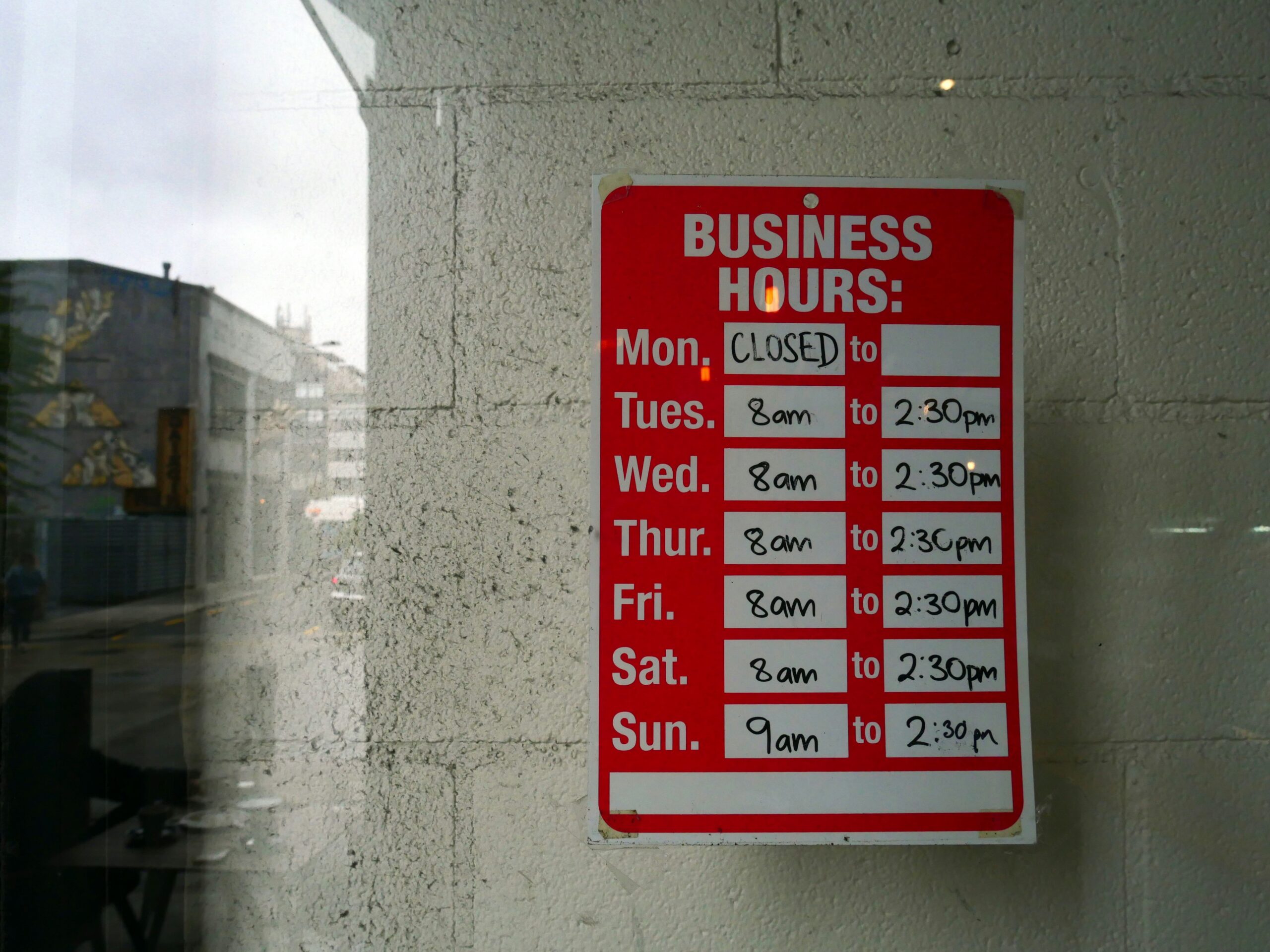
A car door shuts, someone checks a phone, and the group is already irritated before they reach your entrance. The map pin lands behind the building, the hours online differ from the sign on the door, and there is no clue which side has the step-free entry. That is a preventable loss, and spring is the right time to fix it.
Planning helps firms of different sizes and stages; for a shopfront, that starts with the first minute a stranger spends trying to find you.
Make arrival easy
Begin with the details a rushed visitor uses while still in the car or walking from another stop. Opening hours should match everywhere they appear: your website, search profile, social pages, voicemail and front door. If your hours vary by day, say so plainly. If you close for lunch, appointments or school pickups, put that in writing rather than hoping people will guess.
Your map pin deserves a manual check. Stand outside with a phone and test the route a newcomer would follow. If the pin drops at the rear service lane, correct it. If the entrance is inside an arcade, upstairs, through a courtyard or beside another tenancy, add one clear line that explains the approach. Good directions beat clever copy.
Accessible practical information matters for many customers and helps their companions as well. Note whether there are steps, a ramp, heavy doors, narrow aisles, nearby mobility parking, seating, or an easier entrance around the side. Keep it factual. A truthful description lets people decide whether the visit suits them.
Be precise online
Suppose your shop sells gifts made locally and sits two minutes from a busy waterfront. Saying “unique treasures” tells a stranger very little. Saying “locally made gifts and small homewares near the waterfront, opposite the playground” gives them a reason to detour and confidence they are heading to the right place. The same principle applies to photos: show the actual frontage, entrance and street view, not only polished product shots.
There is a trade-off between brevity and completeness. Too much text gets skimmed; too little leaves gaps that create abandoned visits. Aim for the few pieces of information that reduce friction: where to park, how to enter, whether prams fit, whether dogs are welcome, whether pick-up orders use a side door. Review it as if you were arriving with limited time and no local knowledge.
Local discovery still relies on other people talking. Prompt nearby operators, accommodation hosts and community pages with accurate wording they can reuse. If they send someone your way, make sure the details they pass on are consistent with your own. Being easy to find sounds basic because it is basic. It is also sales work, done before anyone crosses the threshold.


